Denby Pottery Closure: On the Value of Things
A reflection on the closure of Denby Pottery and what it might suggest about our relationship with the world.

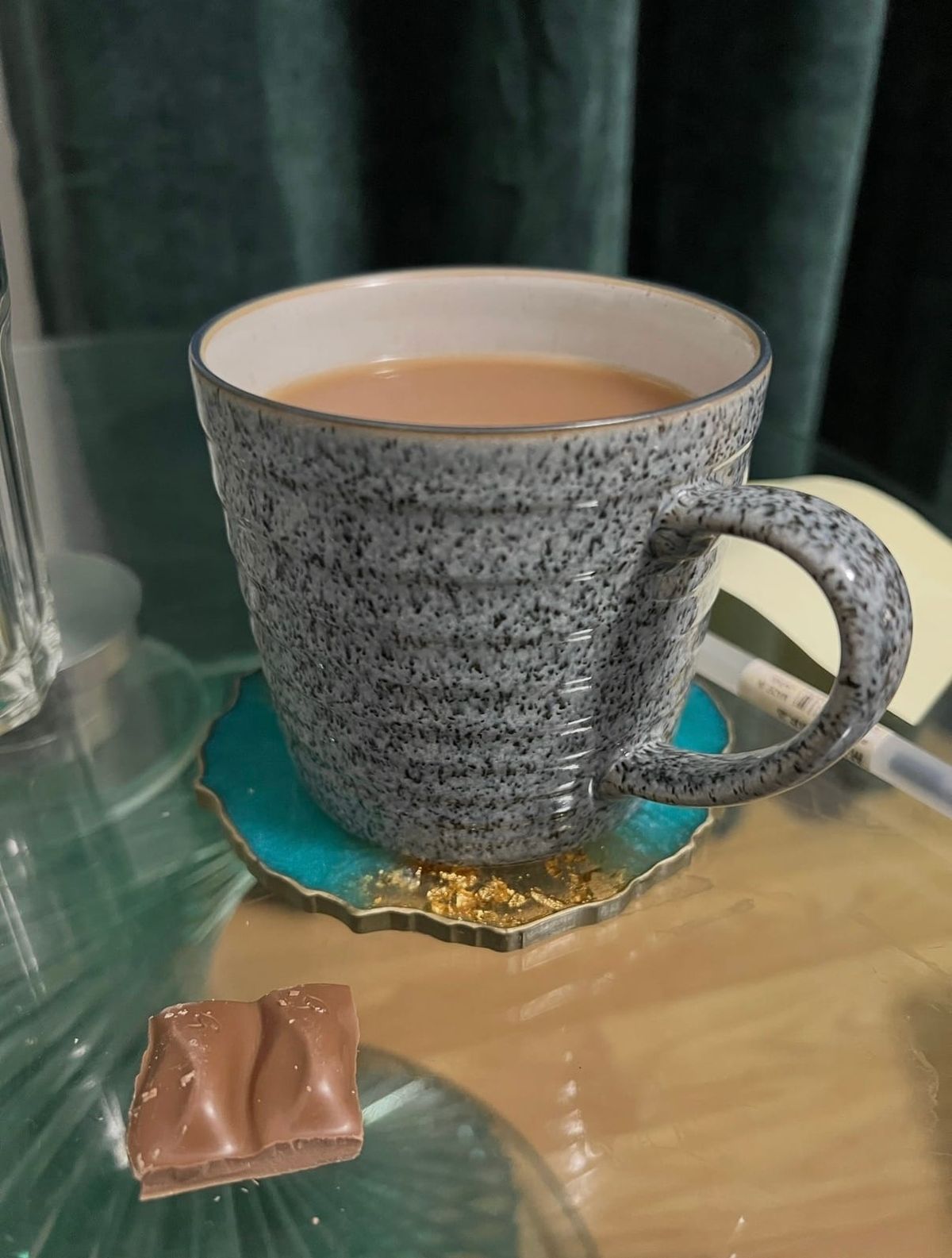
Denby Pottery is in the final stages of its operations, and I cannot help but wonder whether its closure signals a wider deterioration in the value we place upon objects.
Denby’s dinnerware has decorated many of the tables (and carpets) at which I have sat since moving to the UK as a child—from formal Christmas dinners in my best dress as a ten-year-old to munching cereal on the floor. After I first arrived here, I was mesmerised by the colourful rims of their Imperial Blue cereal bowls as I scooped Cocoa Pops from their brilliant white porcelain interiors while sitting cross-legged on the carpet watching cartoons, revelling in the simple, satisfying pleasure of it all and noticing, once I’d finished eating, how the bowl caught the morning sun. Other mornings were spent ogling the Marrakech pattern on the side plates from which I would pick up a buttery slice of wholemeal toast, trying not to let the melting butter drip onto the plate. Is it trite to say that I felt loved—that someone would want, even choose, to hand me one of these precious bowls to eat from? Their plates and dishes have populated many a happy memory, as well as most of my more mundane moments. To begin with, there were lazy mornings in pyjamas, eating with my cousins and impatient to begin the day; now, there are mornings eating yoghurt with my head over a book. It is my favourite time of day; I actually get up early so I can stretch out the stillness and slowly read each sentence, accompanied by my bowls, mugs, and candlesticks.
Maybe you think I am being sentimental—something I have found the British particularly wary of—but even the colours, textures, and weight of the ceramics themselves communicated to me a sense of permanence. These objects were made to last. With that, of course, came a price tag, and sadly it seems as though the public are increasingly unable—or perhaps even unwilling—to pay what such craftsmanship is worth. Perhaps that’s understandable. Nevertheless, I cannot help but lament the loss of this business and the beautiful objects it produced.
I wonder, too, whether what I will miss is not only Denby itself, but the kind of world it represented and served. Perhaps its closure reveals a subtle but ongoing shift in how we relate to the material world. We have become accustomed to things that are increasingly disposable, even though they are usually lighter, cheaper, faster, and more easily replaced. Objects tend no longer to be regarded as commonplace items to be carefully stewarded, but as temporary conveniences, valued chiefly for their utility before they disappear into landfill.
Yet beautiful objects are not static. They evoke something in us; they even speak to us. They ask us to slow down, to notice them, and to care for them. In time, they become the furniture of our memories; after a while, we hardly notice them at all, yet they continue to inhabit the ordinary moments we spend alone and with others. I can remember beloved people who are no longer here simply by looking at a certain mug and recalling how they held it as they walked to the breakfast table. Even a bowl speaks of childhood breakfasts long after the cereal has gone. These things accompany us throughout our lives.
Perhaps this is why Denby’s disappearance feels like more than the loss of a pottery company. It seems like another small step towards a culture that increasingly prizes the immediate over the enduring, the disposable over the permanent, the simulated over the real. We are surrounded by more ‘things’, yet perhaps by fewer objects that invite our attention or require us to steward them carefully rather than simply consume them.
If that is true, then perhaps what we have lost is not merely a manufacturer of ceramics, but another reminder that ordinary life is worth making beautiful with ‘weightier’ objects. Either way, I am saddened for those who are losing their jobs and for those of us who have lost the opportunity to discover these objects for the first time, especially in childhood. It feels as though I am saying goodbye not only to a local business, but also to a connection—a piece of string tying the past to the present, and people to pottery. More than that, its closure introduces a permanence of another kind: the inability to replace what breaks. It is a reminder that some things cannot be replaced.
Not everything can last, but I am grateful that I got to enjoy these things with the people I did. And I’ll endeavour to take good care of my Azure Haze dining set.
Thank you, Denby.